
Lessons from Hemingway
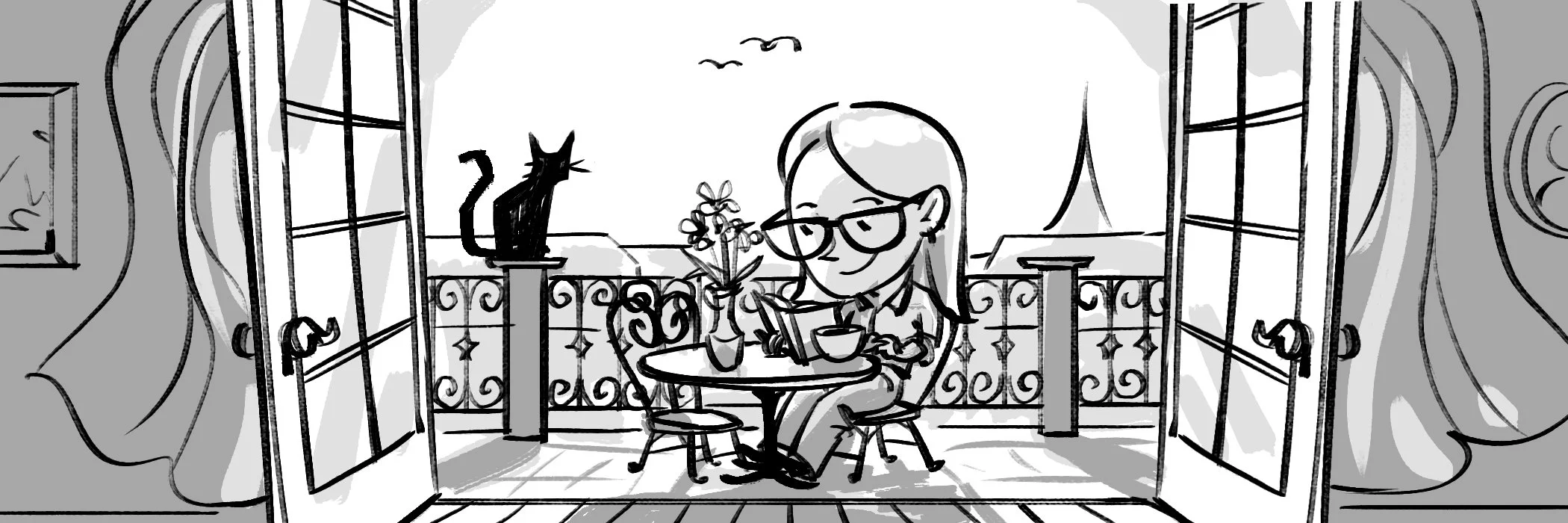
This summer, I have been reading the complete works of Ernest Hemingway. It started off by accident- I loved ‘The Sun Also Rises’, and wanted to keep living in that world. So I picked up ‘A Farewell to Arms’ and then ‘When the Bell Tolls’, ‘The Old Man and the Sea’, and finally, ‘A Moveable Feast’. I also sprinkled in several of his short story collections via audiobooks on long car trips. Hemingway’s stories all inhabit the same world, and it feels easy to flow from one book to the next. I only have a few short story collections and novellas left, and I’ll be sad to see them all finished.
Hemingway once said that he wanted to write one story about each thing he knew. This means his stories are about fishing, hunting, bull fighting, drinking, horse racing, love, loss, and war. He writes about Europe and Africa and Cuba and Northern Michigan. His characters are tragic; they often achieve incredibly difficult goals, only to lose everything in the pursuit. This impression of Hemingway was why it took me so long to read him; on the face of it, the grandiose machoism of his work didn’t appeal to me. But when I started reading, I found an author who writes about the pleasures and beauty of life as much as the difficulties. He finds that the ill-fated challenges people put themselves through are worthy pursuits because they represent the best of what it is to be human. His characters are tragic, but they are also brave, dedicated, hopeful, funny, and in love. They fight for what they care about. They are committed to their work, sometimes to a fault. They enjoy the little moments of life, even in times of difficulty. Across his body of work, Hemingway reflects the beauty of life and optimism about humanity, even as we endure tragedy and hardship. Hemingway lived through perhaps the most devastating and chaotic period of recent history in the west, yet he found reason to be hopeful. This is why I can’t get enough of his work. We, too, live in hard times, and it is more important than ever to find joy and hope wherever we can.
It could be that these were the right stories at the right time for me; I can’t promise that anyone else will enjoy them as much as I did. But I would certainly recommend giving Hemingway a try, especially because many of his works are short. And for creatives, I especially recommend his posthumous memoir, ‘A Moveable Feast’.
This memoir is about his early years as an author, struggling to make ends meet and enjoying his life anyway. It is comforting to be reminded that even masters of a craft had beginnings, that they were uncertain about their creative potential and faced years of difficulty before finding success. Hemingway lived in Paris at this time, and was friends with a small group of writers and painters who all found fame and success eventually, and all shared in the creative struggle. They supported each other through ups and downs across different stages of their careers. Hemingway writes lovingly about his life in Paris and all the joys and challenges he faced. He also shares his approach to creative work, which I haven’t been able to stop thinking about. He followed a few simple rules and principles that allowed him to be highly productive and live a full, adventurous life outside of his work. Here’s the gist of his approach:
Start with one true sentence. This was Hemingway’s method for breaking writer’s block, but I think it can apply to any creative practice. Start with a truth about the thing you want to share and build from there.
Protect a few hours of work each day. Don’t allow distractions to take over that time. Lock it in. And in order for that to be sustainable, don’t overdo it. A few hours of solid work are worth more than a whole day of half-assed work.
A good time to stop working is when you know what comes next. Don’t stop on an unsolved problem, because that makes it hard to start the next day. Instead, stop working when you have a clear idea of the next step so you can easily jump back in.
Do not think about work when you are not working. Your subconscious will continue mulling over the project, but this can only happen if you let your conscious mind rest from it.
Read obsessively (or watch movies, look at art, listen to music, etc). Continually learn and refine your craft by looking at the work of others. Be inspired and develop your own tastes by being conscious of what you like or don’t like and how it evolves over time.
Lastly, pay attention to people and the world around you. Creatives reflect humanity back to us, whether as a form of escape or introspection or critique. This requires us to find truths about the world through observation and inquiry and discussion.
So much of modern productivity culture is concerned with maximizing output, but Hemingway reminds us that we must live our best lives in order to make our best work. This doesn’t mean we need to live an easy life, but we must seek joy and hope and truth as they appear for us. We are each living a different version of the human experience, and our work will be at its best when we give ourselves the opportunity to learn and grow and ultimately share what we know about being a person in this world.
Thanks as always for reading. What are your thoughts on Hemingway? Or on living a fulfilling creative life?